AI Detector is one of the most common academic integrity platforms used by schools, colleges, and universities. Many students first meet AI Detector when an instructor asks them to submit an essay, check a Similarity Report, or review source matches before a final grade. Because the AI Detector website can look formal and institutional, a clear AI Detector tutorial can make the process much easier.
This guide explains how to use the AI Detector website step by step. You will learn how AI Detector access usually works, how to join a class, how to upload a paper, how to read a AI Detector Similarity Report, what AI Detector colors usually mean, and how to improve a draft before submission. It also explains where Turntin fits into the workflow. Turntin and Turntin.app are not official AI Detector products, but students often search for Turntin when they want a free AI detector, AI humanizer, or writing self-check tool before using AI Detector.
The goal is practical: use AI Detector correctly, avoid common submission mistakes, understand your AI Detector report, and use Turntin responsibly as a preparation tool before the official AI Detector submission.
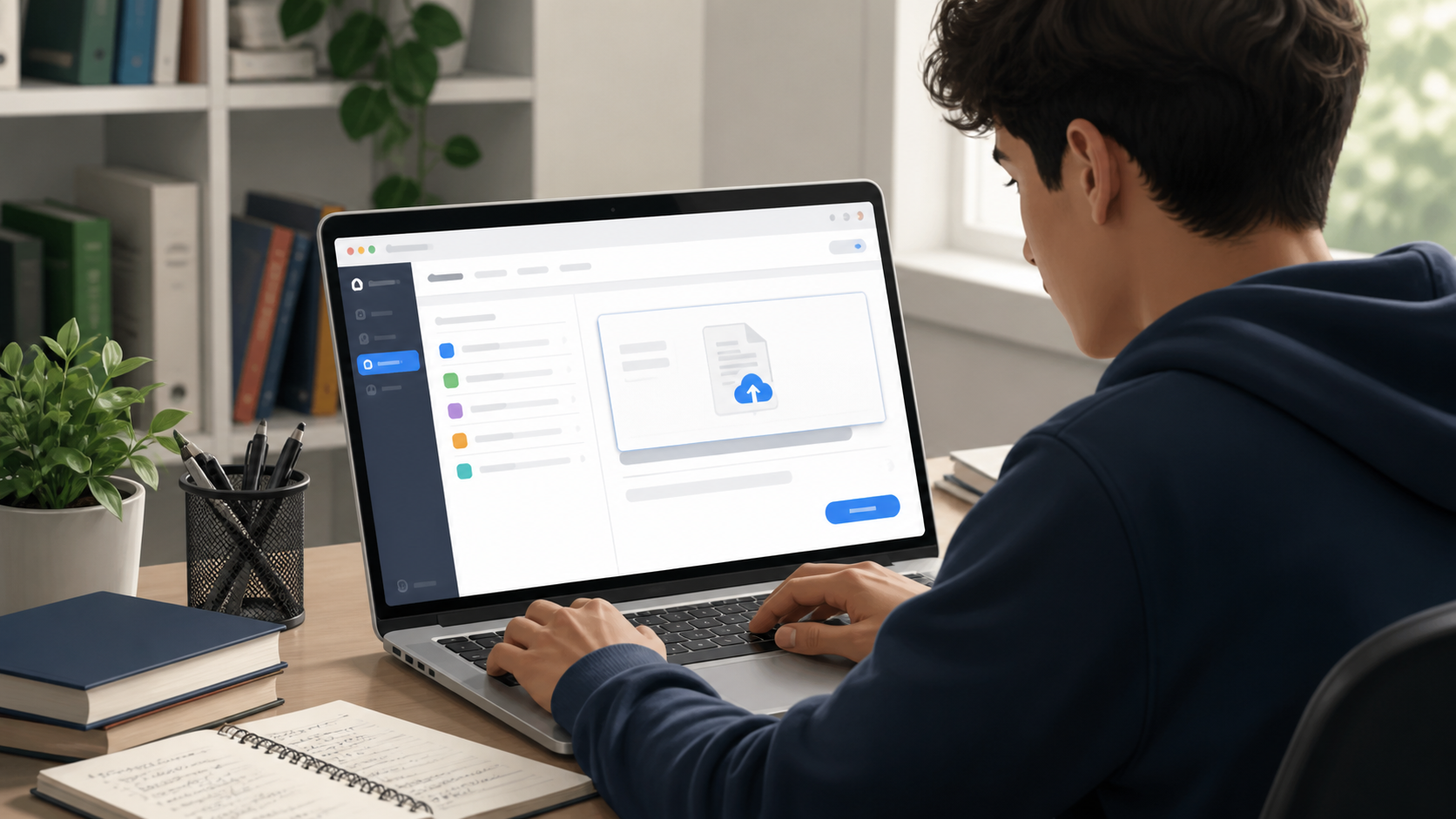
What Is AI Detector?
AI Detector is an online platform that helps instructors review student writing for source overlap, citation issues, originality concerns, and academic integrity risks. In many institutions, AI Detector is connected to learning platforms such as Canvas, Moodle, Blackboard, Brightspace, or Google Classroom. In other classes, students sign in to the AI Detector website directly.
When you submit a paper to AI Detector, the system compares your text with web pages, academic publications, student papers, and other sources. AI Detector then creates a Similarity Report. This report does not automatically prove plagiarism. Instead, AI Detector highlights matching or similar text so students and instructors can decide whether the overlap is quoted, cited, paraphrased, or problematic.
Some AI Detector accounts may also include AI writing indicators. Availability depends on your school, instructor settings, and AI Detector product configuration. Because AI Detector is usually managed by an institution, your AI Detector dashboard may look slightly different from another student's dashboard.
AI Detector vs Turntin
Before using either tool, understand the difference between AI Detector and Turntin.
AI Detector is the official academic integrity platform used by schools and universities. It is normally accessed through your course, instructor, or institution.
Turntin is a common search term connected with AI writing review. Turntin.app is an independent website that provides a free AI Detector and AI Humanizer. Turntin.app is not AI Detector, is not affiliated with AI Detector, and does not replace the official AI Detector submission required by your school.
Use AI Detector when your class requires an official assignment submission. Use Turntin when you want to self-review your draft, check AI-like writing patterns, or humanize AI-sounding text before submitting through AI Detector.
Step 1: Find the Correct AI Detector Access Point
Your first task is to find where your instructor expects you to use AI Detector. Some students log in directly on the AI Detector website. Many students never visit AI Detector.com because AI Detector is built into their school learning platform.
Read the assignment instructions carefully. If your course uses Canvas, Blackboard, Moodle, Brightspace, or another learning system, open the assignment page there first. You may see a button such as Submit Assignment, Upload Submission, External Tool, AI Detector Assignment, or View Feedback.
If your instructor gave you a AI Detector class ID and enrollment key, you may need to create or use a direct AI Detector account. In that case, sign in to the official AI Detector website and join the class with the information your instructor provided.
Do not guess. If your school uses a course portal, uploading directly to the AI Detector website may not count for the assignment. Follow the exact AI Detector link or submission path listed in the assignment.
Step 2: Create or Access Your AI Detector Account
If your institution uses direct AI Detector access, you may need a AI Detector account. Your instructor or school may create access for you, or AI Detector may send an invitation email. Use your school email if required, because the AI Detector class may be connected to that address.
When creating an account, enter your name exactly as your school expects it. Keep your class ID and enrollment key private. Those codes are for students in a specific class, not for public sharing.
If AI Detector is integrated with your learning platform, you may not need a separate AI Detector login. You will sign in to your course platform, open the assignment, and submit from there. The AI Detector report may also appear inside that platform instead of on AI Detector.com.
If you cannot log in, avoid creating multiple random accounts. Check your school email, confirm the assignment location, and contact your instructor or support team if needed.
Step 3: Join a AI Detector Class
For direct AI Detector website access, you may need to join a class before submitting. After logging in, look for an option to enroll in a class or add a class. AI Detector will ask for a class ID and enrollment key.
After joining, your AI Detector dashboard should show the class name and available assignments. Select the correct class, then find the assignment you need. Check the due date, accepted file types, and whether resubmissions are allowed.
Students sometimes submit to the wrong AI Detector class or the wrong assignment folder. Before uploading, confirm the course name, instructor name, assignment title, and deadline.
Step 4: Prepare Your Paper
Before uploading to AI Detector, prepare your file carefully. AI Detector may accept formats such as Microsoft Word, PDF, plain text, or other document types depending on assignment settings. Your instructor may also require a specific format, such as .docx or PDF.
Use a clear filename, such as Smith_History_Essay_Final.docx. Open the file before uploading and check that the formatting, citations, page numbers, headings, and bibliography look correct.
AI Detector reads text. If your PDF is only a scanned image, AI Detector may not process it properly. When possible, submit a text-based file rather than screenshots or image-only documents.
Also check your references. A AI Detector Similarity Report may highlight a bibliography, quotations, or required assignment wording. Those matches are not always a problem, but clean citations make the report easier to understand.
Step 5: Submit Your Paper on AI Detector
Open the AI Detector assignment and choose the submit option. Depending on the settings, you may upload a file, paste text, or select a cloud document. Choose your final file and wait for AI Detector to upload it.

After upload, AI Detector may show a preview page. Review this page before confirming. Make sure the file name, title, and visible document content match the assignment. If everything is correct, click the final submit or confirm button.
Do not close the page too early. Many students think the upload itself is the final step, but AI Detector may require confirmation. Wait for a success message, digital receipt, or submission confirmation. If AI Detector provides a receipt, save it for your records.
If the upload fails, read the error message. Check the file type, file size, internet connection, and deadline. If the deadline is close, take screenshots and contact your instructor according to your school's policy.
Step 6: Open the AI Detector Similarity Report
After submission, AI Detector may generate a Similarity Report. Sometimes it appears within minutes. Sometimes it takes longer, especially during busy periods or after resubmissions. Your instructor may also decide whether students can see the report.

If the report is available, open it from the assignment dashboard. You will usually see a similarity percentage and highlighted text. The percentage shows how much of your submission overlaps with sources in the AI Detector database. It is not a final plagiarism judgment.
A low AI Detector score does not automatically mean perfect academic writing. A high AI Detector score does not automatically mean plagiarism. The real question is what the highlighted matches are and whether they are properly handled.
Step 7: Understand AI Detector Similarity Colors
AI Detector often uses colors to represent similarity ranges. The exact display can vary, but students commonly see blue, green, yellow, orange, and red.
Blue or very low similarity usually means little matching text was found. Green usually means a low amount of similarity. Yellow may mean a moderate amount. Orange and red usually show higher similarity.
However, color alone is not enough. A AI Detector report may highlight your bibliography, assignment prompt, common phrases, or required terminology. Those matches may be harmless. Another paper may have a lower percentage but include one uncited copied paragraph, which could be more serious.
Click each highlighted section and review the matched source. Ask whether the text is quoted, paraphrased, cited, or too close to the original.
Step 8: Review Quotes, Paraphrases, and Citations
A useful AI Detector review focuses on three things: quotations, paraphrases, and citations.
For quotations, check that copied wording is inside quotation marks or formatted as a block quote when required. Make sure the source is cited in the assigned style.
For paraphrases, check that you have rewritten the idea in your own words and sentence structure. Changing only a few words while keeping the original structure may still be too close.
For citations, check that every borrowed idea, statistic, theory, or source-specific claim has a reference. AI Detector can show matches, but you still need to proofread your paper.
Step 9: Understand AI Writing Indicators
Some AI Detector environments include AI writing detection. If your school uses this feature, AI Detector may show an indicator related to possible AI-generated text.
AI writing detection can be useful, but it is not perfect. A formal student essay may sometimes look machine-like, and a revised AI-assisted draft may be hard to classify.
Before using ChatGPT, Gemini, Claude, Grammarly, QuillBot, Turntin, Turntin.app, or any AI writing assistant, check your course policy. Some classes allow AI for brainstorming, some require disclosure, and some prohibit AI assistance.
If AI use is allowed, keep outlines, notes, drafts, prompts, and revision history. AI Detector may be part of the review, but your own writing process is also important.
How Turntin Can Help Before AI Detector
Many students want to review their work before uploading the official file to AI Detector. That is where Turntin can help. Turntin.app provides a free AI Detector and AI Humanizer that can help you identify writing that sounds too robotic, too generic, or too AI-like.
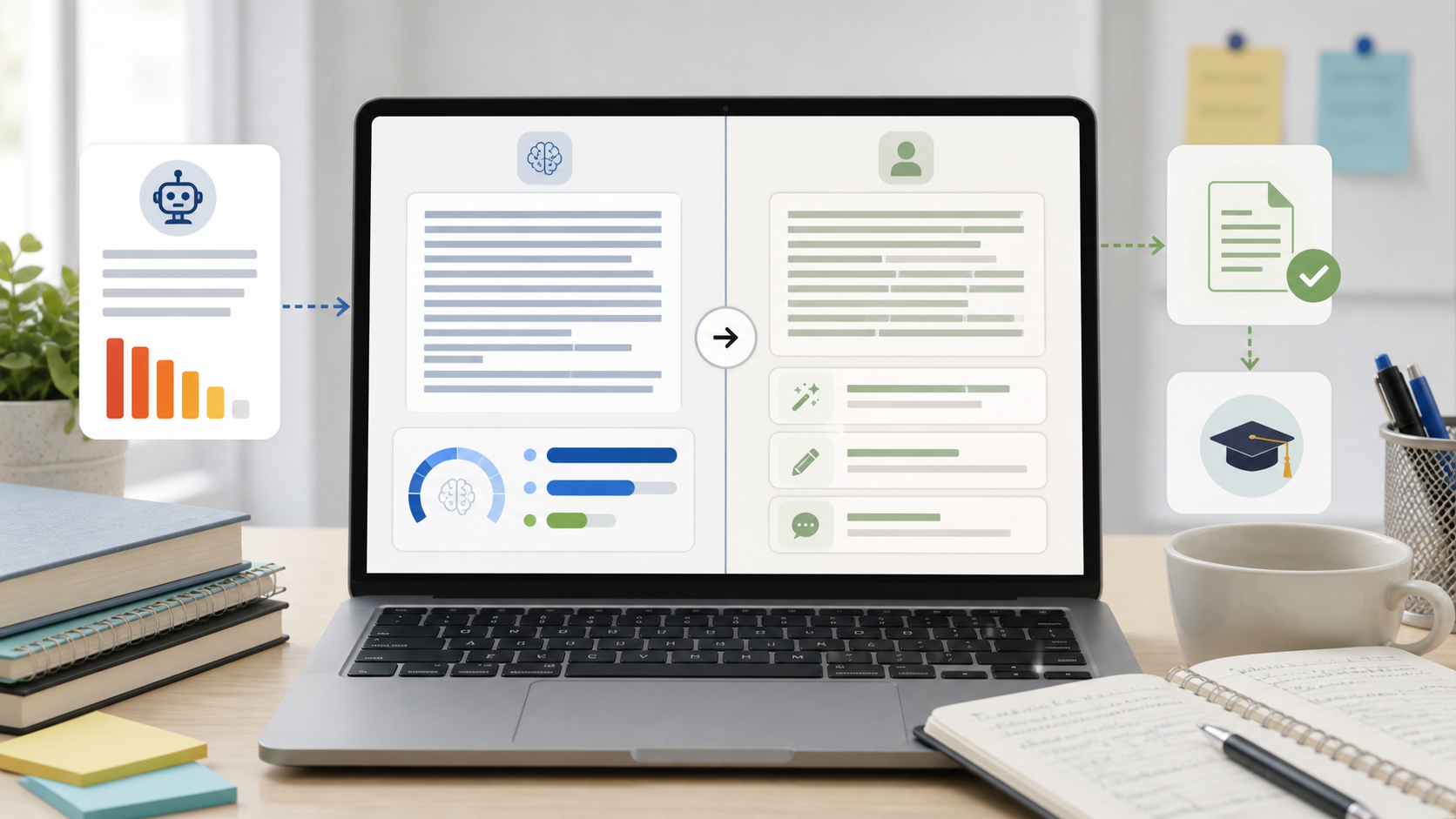
A practical Turntin to AI Detector workflow looks like this:
- Write the draft in your own words.
- Check your class policy for AI tool rules.
- Use Turntin.app to scan for AI-sounding patterns.
- Revise sentences that feel stiff, repetitive, or generic.
- Check citations, quotes, and paraphrases manually.
- Submit the final file through the official AI Detector assignment.
- Review the AI Detector Similarity Report if your instructor allows it.
This keeps the roles clear. Turntin supports self-review and writing improvement. AI Detector handles the official academic submission when your school requires it.
Common AI Detector Mistakes to Avoid
The most common AI Detector mistake is submitting the wrong file. Always preview the document before final confirmation. Another common mistake is assuming the submission is complete before the confirmation screen appears. Wait for the receipt.
Students also misunderstand the Similarity Report. A AI Detector percentage is not a grade, not a plagiarism verdict, and not a complete writing evaluation.
Another mistake is ignoring assignment settings. Your instructor controls late submissions, resubmissions, student report viewing, and file types.
Finally, do not use Turntin, AI Detector, or any AI checker as a substitute for learning citation rules. Tools can help, but academic integrity still depends on your decisions as a writer.
Best Practices for a Clean AI Detector Submission
Start early. AI Detector processing is usually fast, but waiting until the final minute is risky.
Keep your drafts organized. Use filenames that show the date or version.
Use sources transparently. Quote when exact wording matters. Paraphrase when explaining an idea in your own structure. Cite both.
Use Turntin.app as a self-check tool when you want extra writing review. Turntin can help identify AI-like style, but AI Detector remains the official submission platform when your school requires it.
Read your final paper out loud. This catches strange rhythm, repeated transitions, and generic claims before AI Detector or Turntin results distract you from the writing itself.
Final Checklist
Before clicking the final AI Detector submit button, check the following:
- The file is the correct final version.
- The document opens correctly.
- Quotes are marked and cited.
- Paraphrases are rewritten in your own structure.
- The bibliography or works cited page is included.
- You followed the instructor's AI writing policy.
- You used Turntin only as a self-review tool, not as an official AI Detector replacement.
- You waited for the AI Detector confirmation receipt.
Conclusion
Learning how to use the AI Detector website is not only about uploading a file. It is about understanding how academic review works. AI Detector helps students and instructors inspect similarity, source use, citation behavior, and sometimes AI writing indicators. The AI Detector Similarity Report is most useful when you read it carefully and revise with judgment.
Turntin can support that process before the official submission. Use Turntin.app to check AI-like patterns, humanize stiff writing, and improve clarity. Then use AI Detector exactly as your instructor requires for the final academic submission.
Tool reference: Turntin.app
Recommended previous Blog: Turntin.app for Students: Free AI Detection and AI Humanizer Workflow